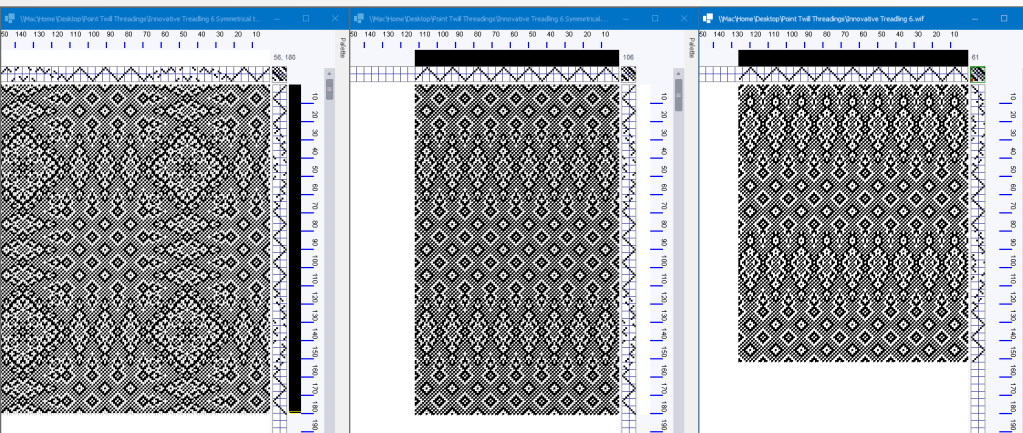
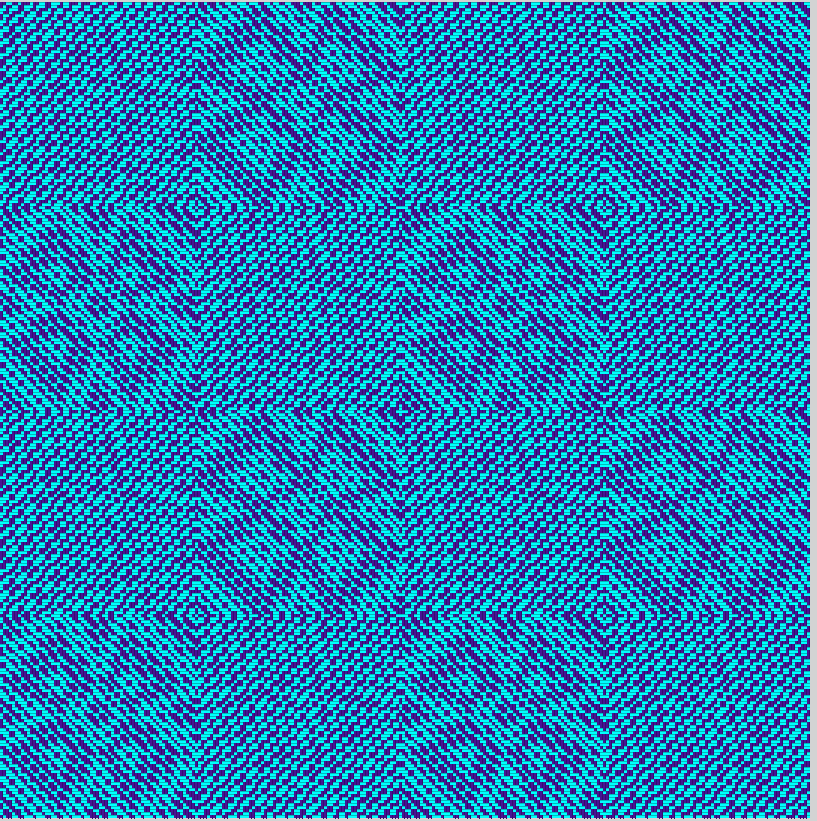
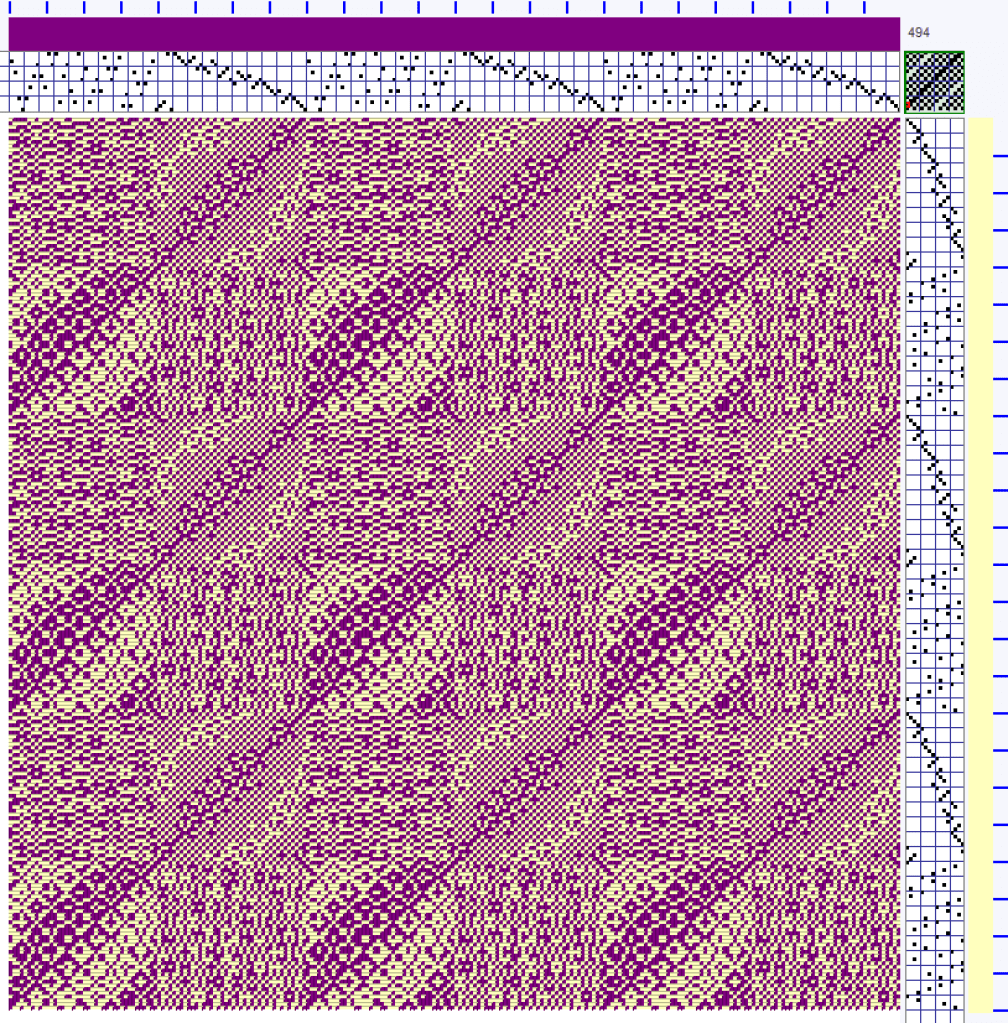
• I’ll bet you didn’t know that four leaf clovers can be blue. Insert smiley face. This draft for eight shafts was created using the principles of network drafting and amalgamation. To learn more about these topics, check out the online class I’ve created in partnership with LoftyFiber. The class is self-paced and contains many hours of video and written instructions. It is suitable for weavers with eight shafts and above.

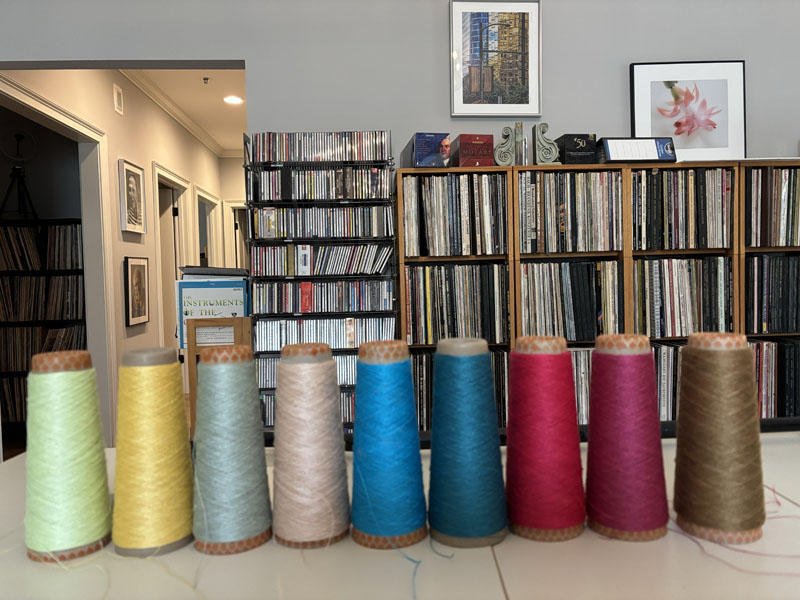
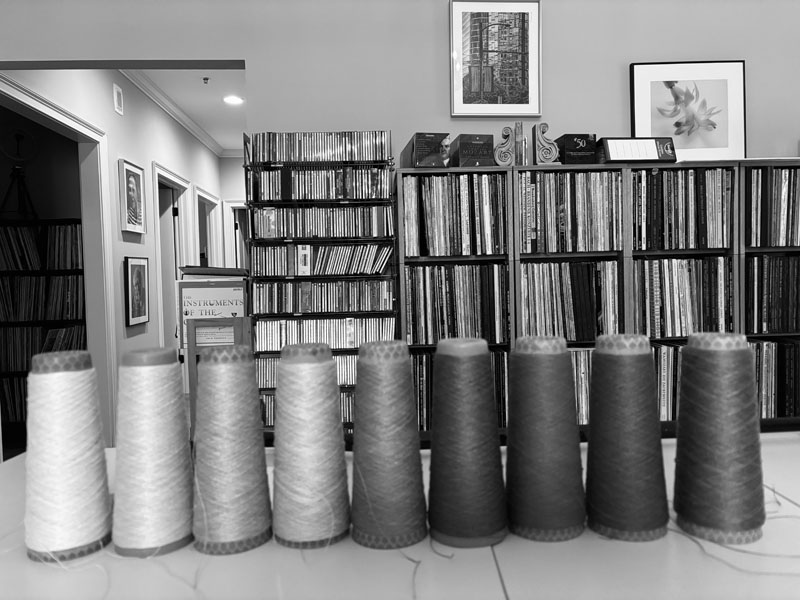
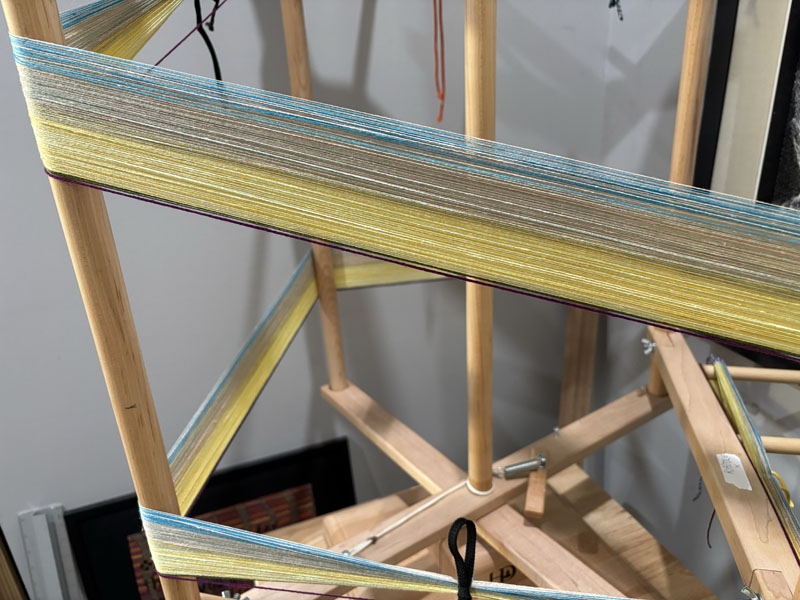
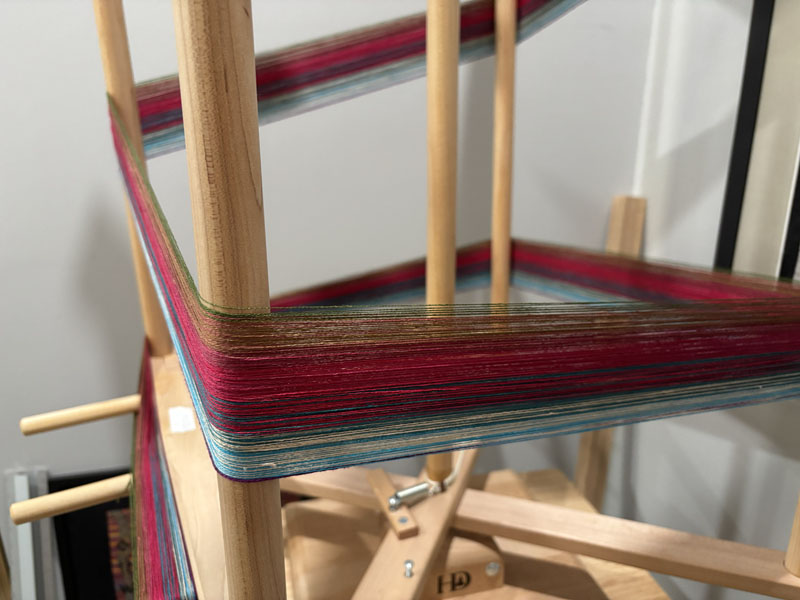
  • I’m assembling leftover cones of 30/2 linen in an effort at stash-busting (does that ever end?) and tying to arrange them in order of tonal value.

    An effective way to do this is to photograph the yarn in olor and then reduce the image to black and white.

    After the decisions are made, I begin winding the warp, two ends at a time, and as each color is used up, I add the next one in line, and so on. This warp will require two chains. Here’s the first…

    …and here’s the second.

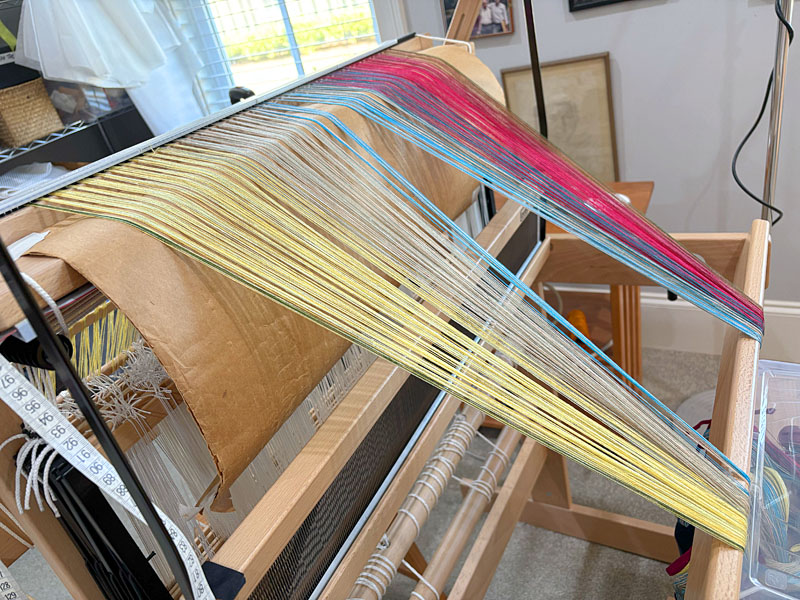
    The two chains meet again in the raddle, and they are ready to be wound onto the warp beam. Stay tuned.

    And in the Department of Books, I have finished reading 1Q84 by Haruki Murakami, one of my favorite authors. Warning – X-rated for violence and adult content.

  • When I was a very new weaver, one of the first pieces of cloth that draw my attention was a handspun, handwoven gray wool. The structure was plain weave, there was nothing flashy about it, but it invited you to caress it and enjoy its slight variations in tone. As. I recall, the warp and weft were balanced: same epi and ppi.

    But as I jumped ahead willy-nilly in my weaving self-education, and followed my personal rabbit holes of loom-controlled structure, I never got around to covering some of the basics. It seems that now is the time to repair some of those omissions.

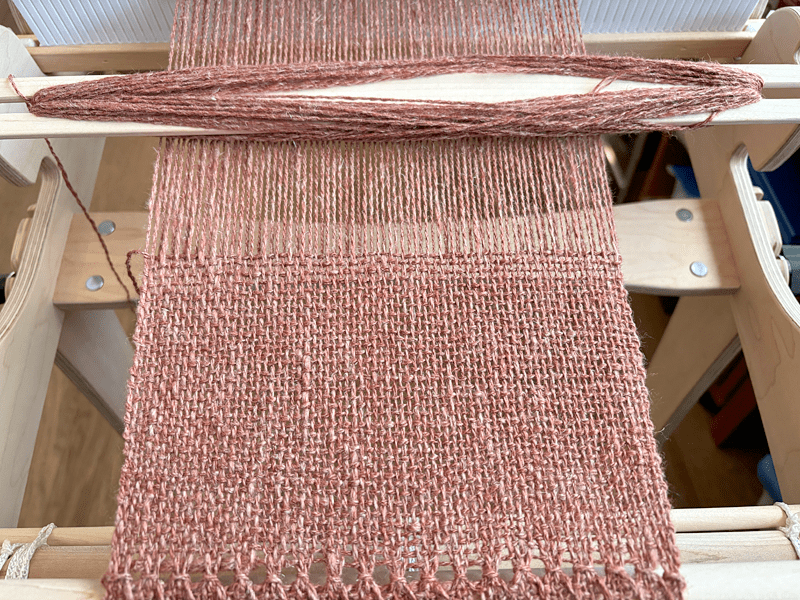
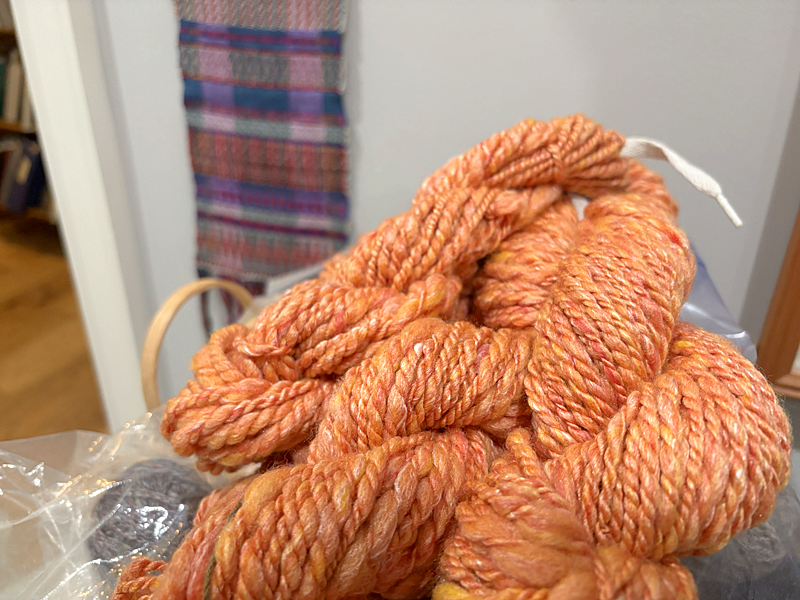
    From my stash I pulled some skeins of handspun woo/linen blend. This yarn was spun and plied a couple of years ago from a carded blend purchased at Lofty Fiber. It was a dream to spin and was just waiting for the perfect opportunity to shine. I warped my rigid heddle loom at 10 epi. So far I am getting a comfortable beat of almost 10 ppi. I expect that after the tension os released and this piece is wet finished I will get a balanced cloth. We’ll see.

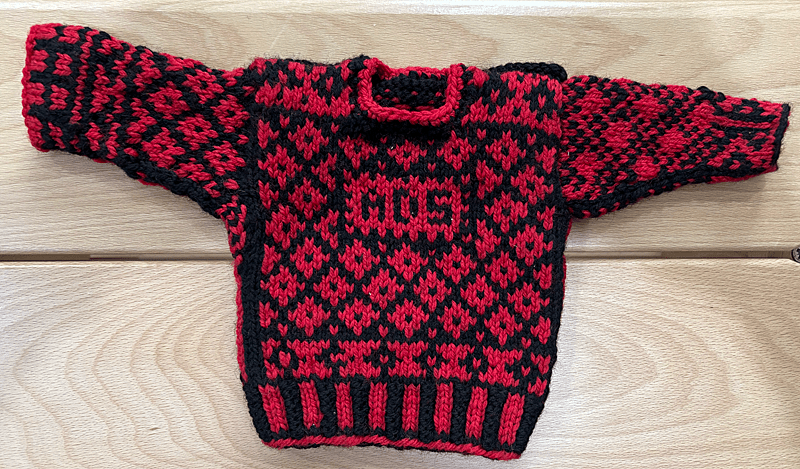
  • Last night while sorting through a box of stuff in order to make room for more stuff (an endless cycle around here), I found this treasure. It’s a tiny gansey, wingspan 14″, which I knitted many years ago in a workshop taught by knitting genius Beth Brown-Reinsel. Full disclosure: this is Beth’s own design, although the initials are mine.

    Discovering this tiny sweater after so many years is heartwarming. I’m going to find a space for it on the wall. Or if any appropriately sized person shows up here, they are welcome to wear it.

  • Here’s the puzzle: whether to buy more yarn and weave/stitch/sew to make more stuff which then has to find a place, or to remake/reuse what I already have stored. And here’s the other part of the puzzle. There are still only 24 hours in each day (at last count). What takes priority? Time at the computer, time at the loom, time with family and friends, time with books…as my grandmother used to say, Oy vey.

    A big salute to all my hardy friends (and some not so hardy) who turned out for No Kings Day. My heart was with you.

  • Yes, we’re back, with a slightly different look. After blogging for 15+ years on a platform which vanished after a 30-day notice (although I should have seen the warning signs) we are back. Thanks for your support and your patience during this frustrating time. And a very big thanks to Trevor, Andrew, and Cathy, three skilled and patient humans, who made the new Weaverly happen.

    I decided not to include my email address, but you can communicate with me, if you wish, by leaving a comment down below. Scroll all the way down.

    There’s also a place on the sidebar to subscribe.

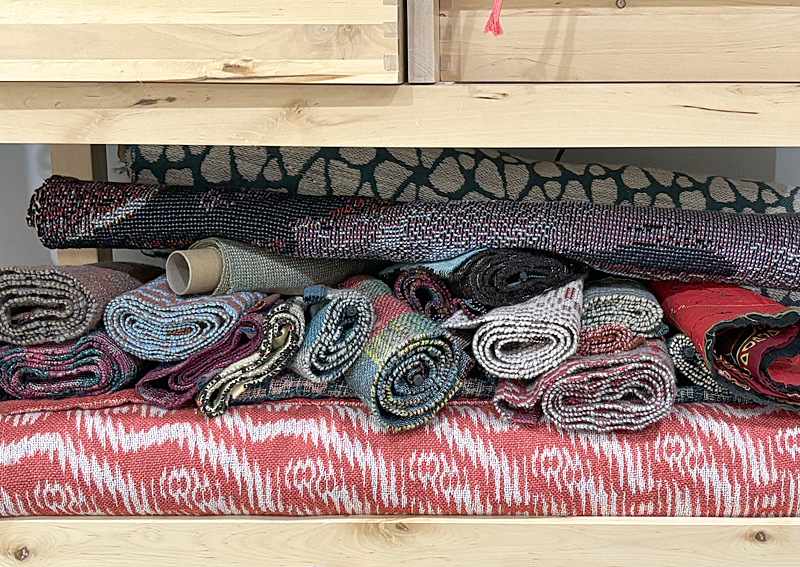
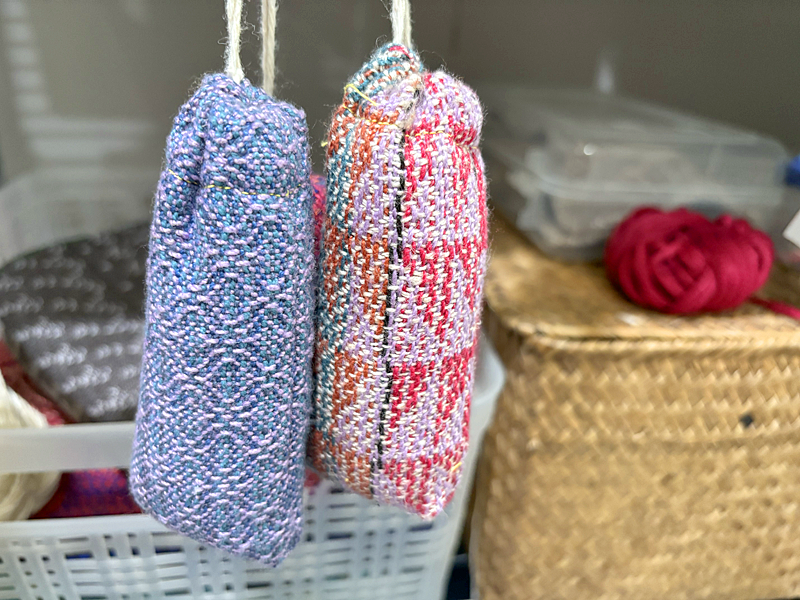
    Meanwhile, back at the ranch, I experienced a bookcase collapse, weaving books all over the floor, looked like an earthquake. Had to take steps. Reorganization time. Here are a few unposed snapshots of the studio this morning.

  • I am fascinated by weather maps and find unexpected beauty in wind patterns especially. How can anyone resist this morning’s map off the Carolina coast (as long as you are warm and dry, as I hope you are)?

    Yesterday I cut off a finished warp, and machine washed & dried it after separating the individual napkins (which had been hemstitched while still under tension). I had not previously worked with this 8/4 cotton as warp and was blown away by the beauty of the fringe after washing. I had spent weeks on the computer version of the draft, and more weeks on the weaving, but was totally unprepared for the star of the show: the beautiful fringe.

  • You’ll need some distance to make those dinnerplate-sized circles appear. Or just squint a little. 8/4 cotton warp & weft at 15 epi and ppi.

  • This draft for 16 shafts combines a 4×6 initial (rosepath or extended point twill) on a straight pattern line, with amalgamation of the resulting threading. Tromp as writ. The maximum float is 5. This draft would be very weavable, with much textural variety in the various blocks. Restrict the length of the floats in the tieup to 2. Wrapping or rotating the tieup will give many interesting variations.

  • When plotting your pattern lines on a network, whether for warp or weft, you needn’t be limited to straight lines, such as 1-2-3-4. Why not try initials such as point twills, rosepath, etc. In fact, any combinations that work together as warp/weft combinations on a given number of shafts will work as initials in a weave draft.

    The following weave sampler of 4 different 4-shaft threadings, when combined with their associated treadlings (in other words, tromped as writ) shows that any two of these initials will work together.

    Therefore, in the following diagram, any of the initials in the first row will work in a threading draft with any of the initials in the second row for a treadling draft:

    In subsequent posts I will give examples of the process with actual 8 and 16 shaft drafts. Stay tuned!

  • Liftplan created with a simple curved line which was then networked with a rosepath-type initial. It required a bit of cleaning up, but here’s the result.

    Here’s some Muhly grass from a few years ago.

    And. in the Department of Books, I just finished reading Colorless Tsukuru Tazaki by Haruki Murakami