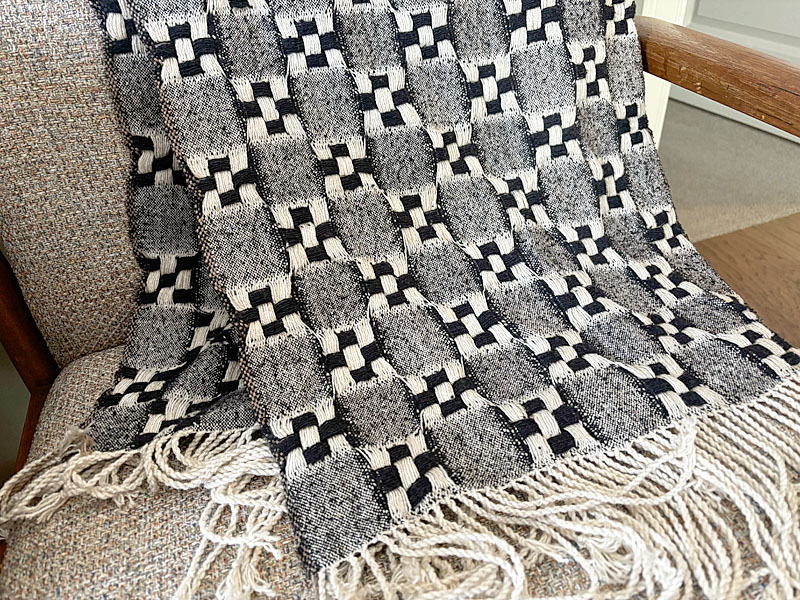
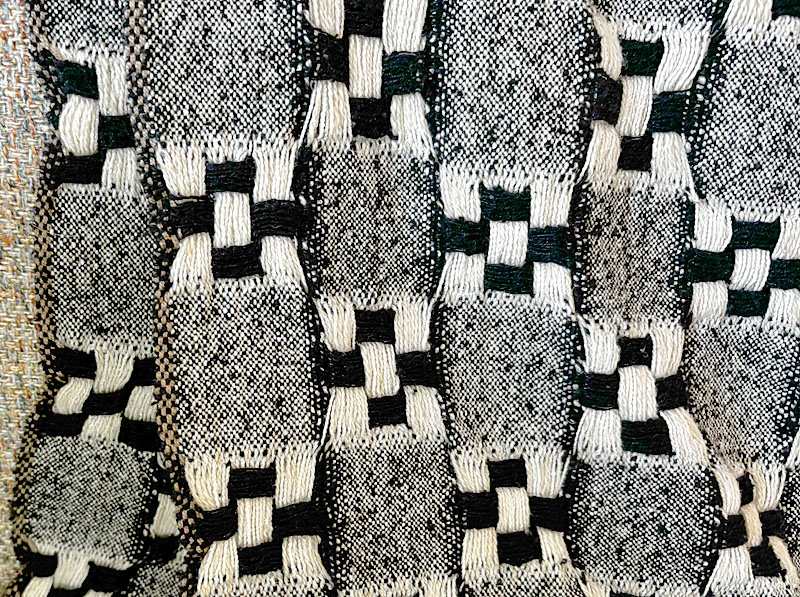
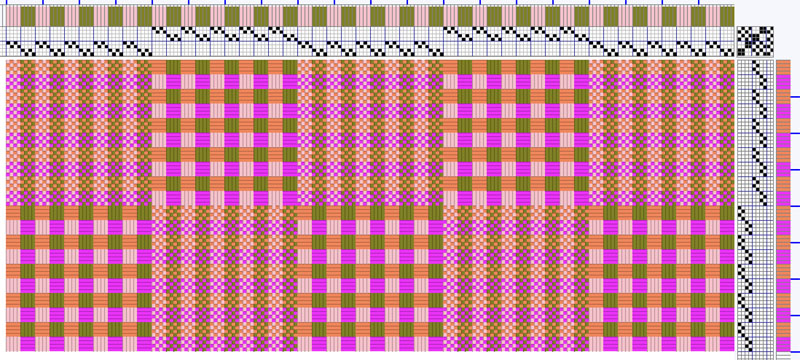
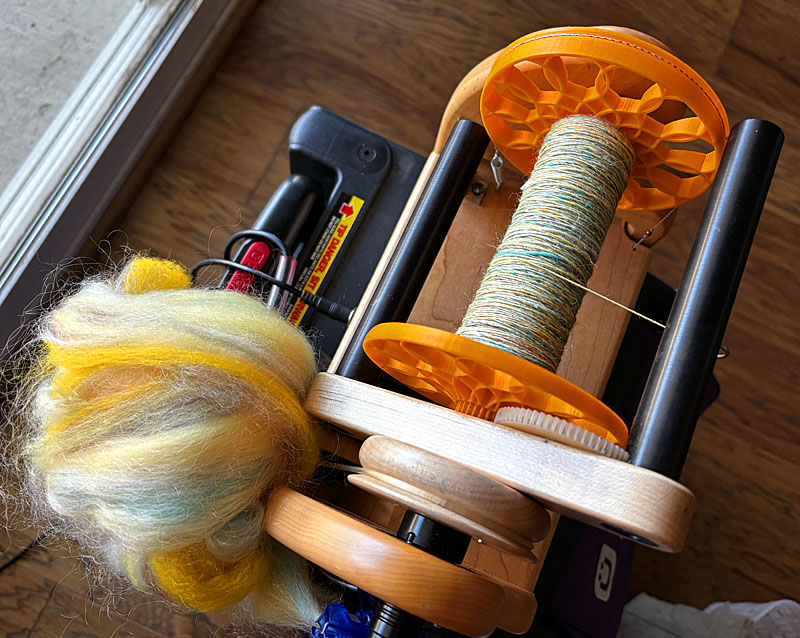
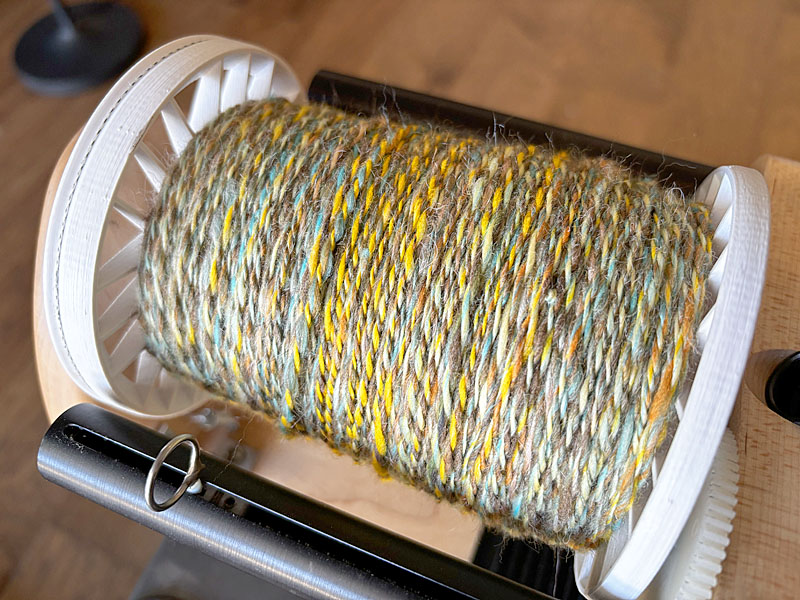
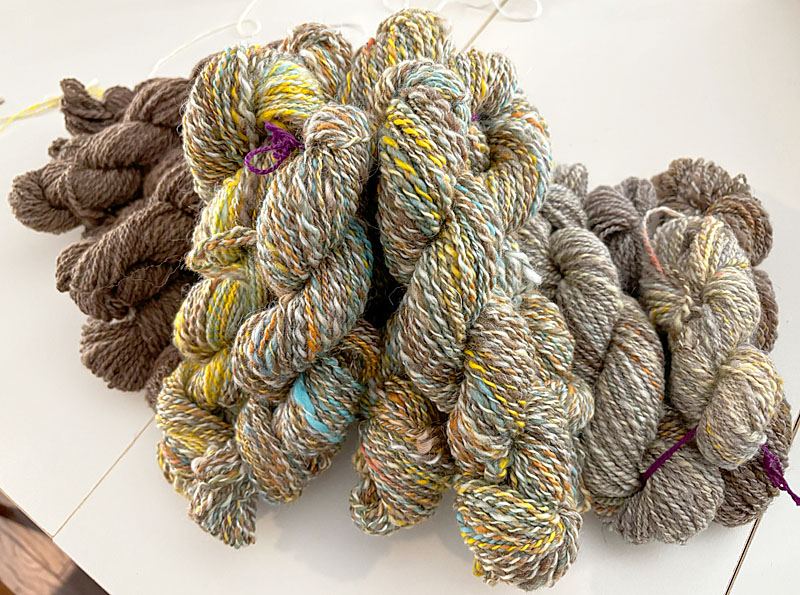
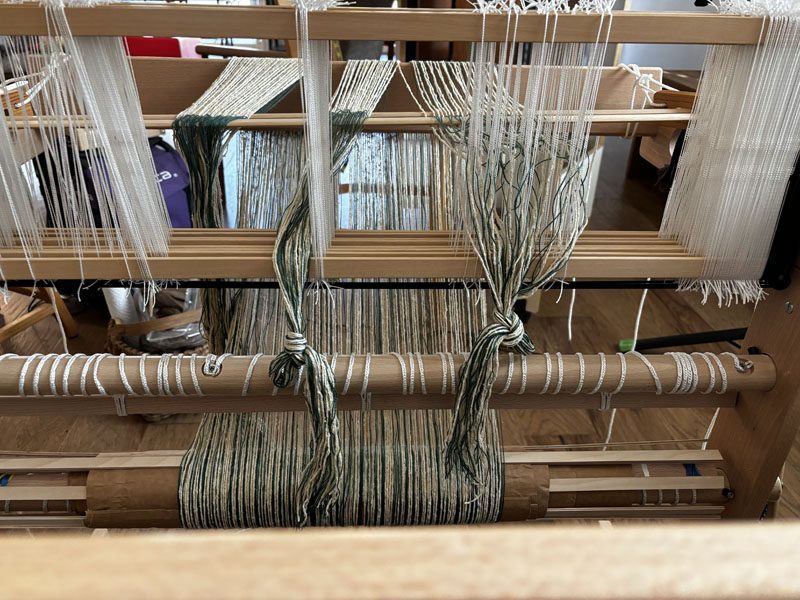
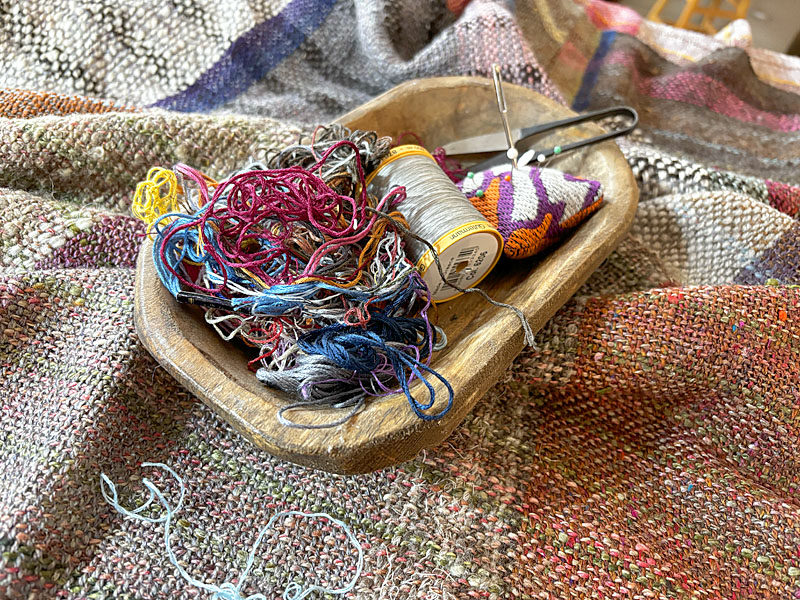
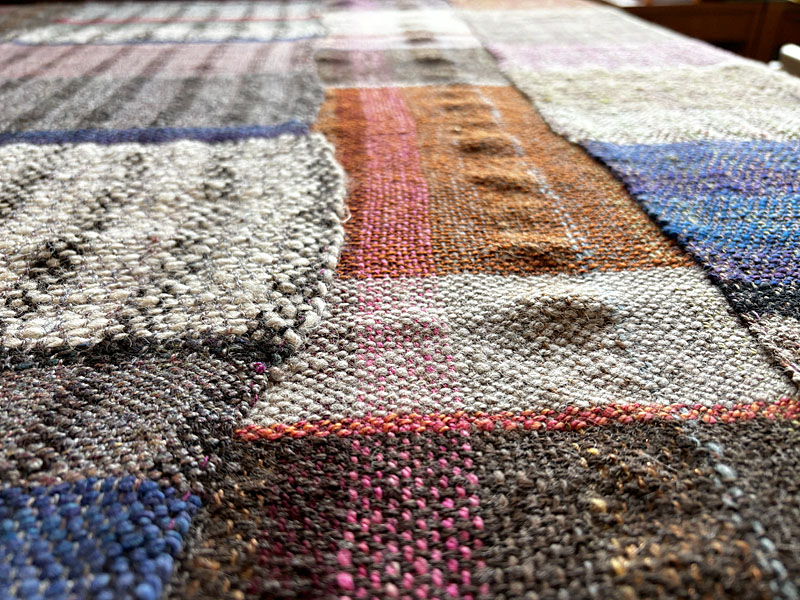
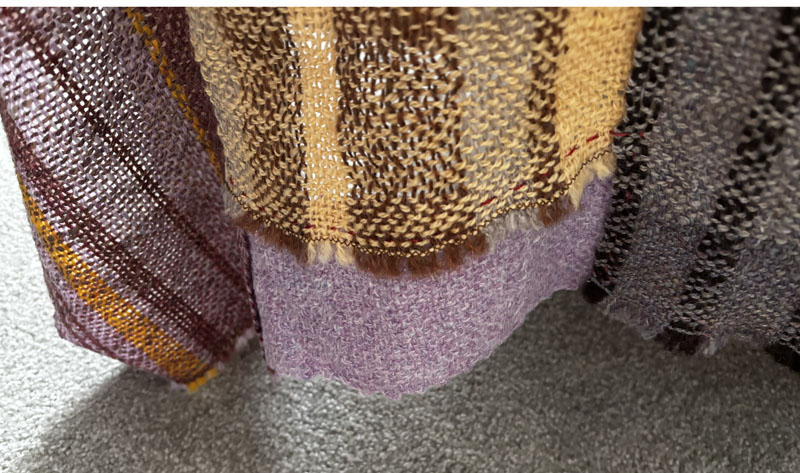
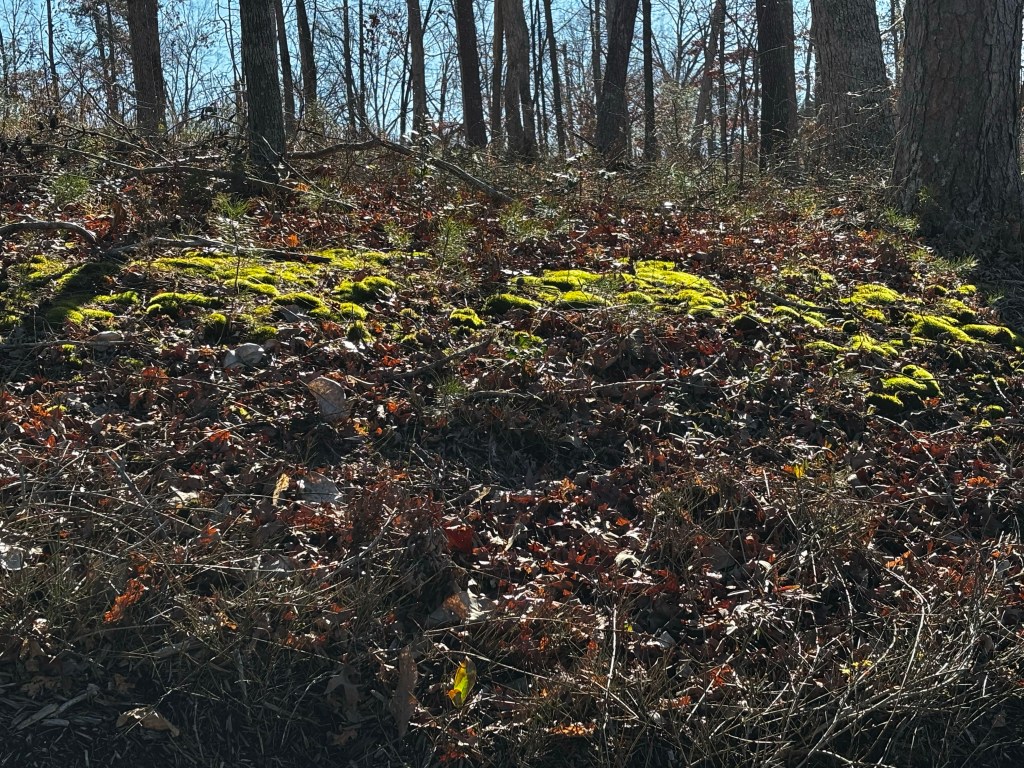
• Yes, truly, that’s what I have entitled this draft. I doodle on the computer when the yarn refuses to behave. Or when the weaving pixies run amok, as they have this week.

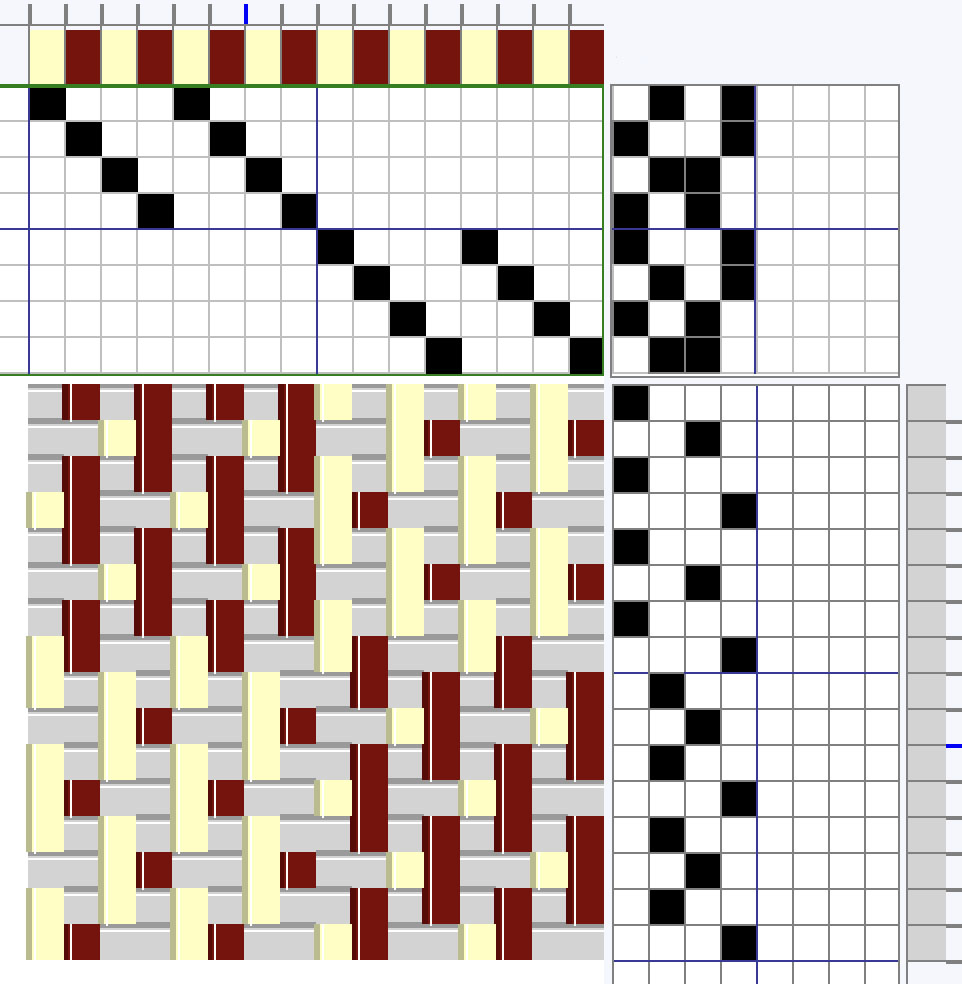
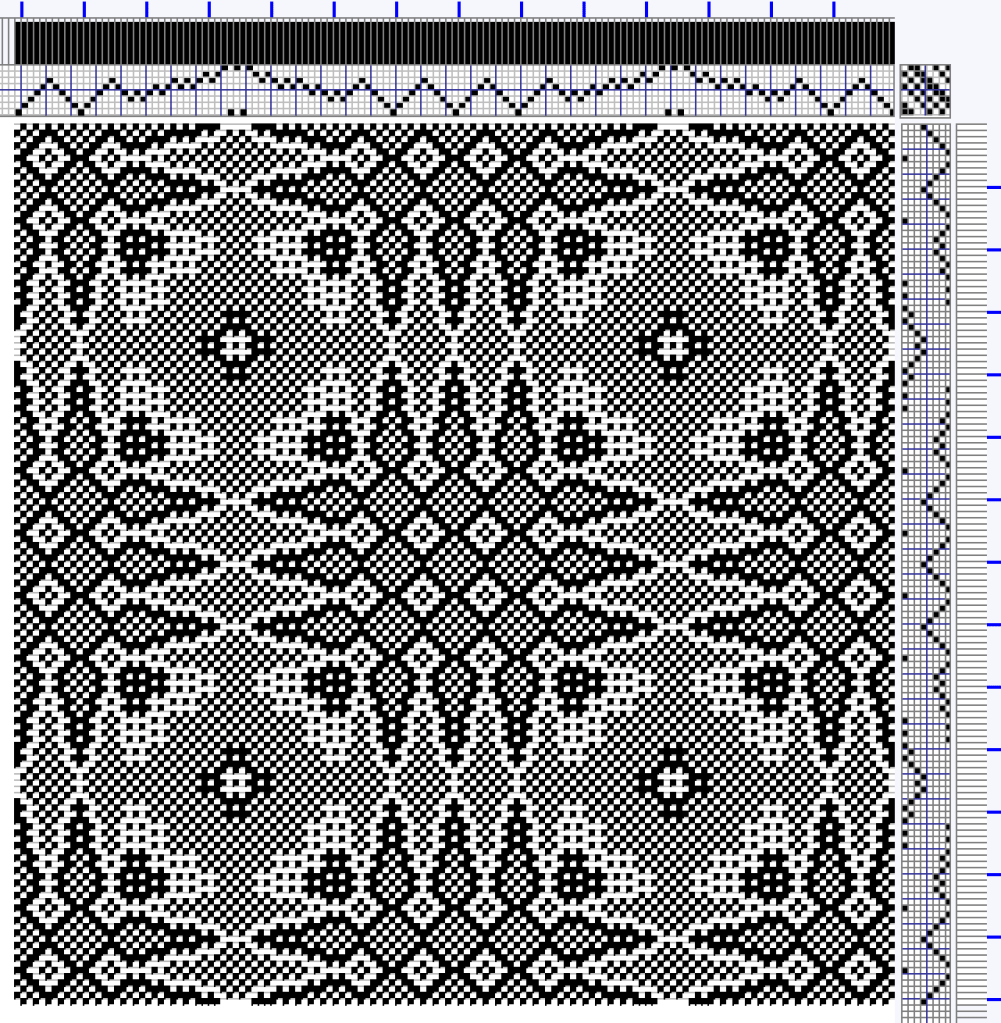
    It’s an amalgamation on a simple point twill, no networking here, and I designed it with the help of TempoWeave on my Mac. See sidebar for more resources about amalgamation.

    If you look at the amalgamated (i.e., fuzzy) parts of this draft and squint a little, you will see some lacy bits. That’s where the longer floats tend to gather. But no floats are longer than 5 in this draft. Feel free to use it in your own work, but please give appropriate credit. If you’d really like to see a wif, just leave me a comment. If enough people are interested, I’ll upload it to handweaving.net.

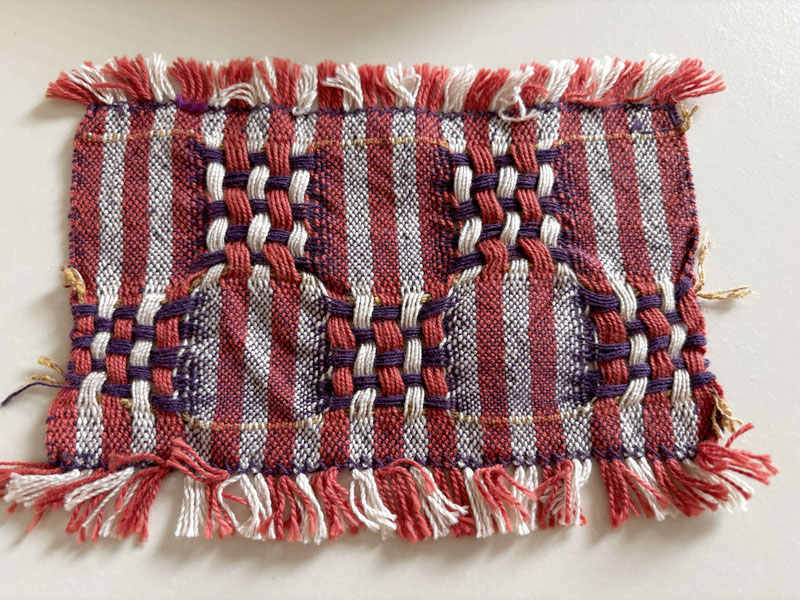
    You can have so much fun with these simple amalgamations. Flip, wrap, or rotate the tieups, Add color, or go for total monochrome and just concentrate on the textures.

    And here’s a bit of hope for all my friends, a sunrise picture captured o a cold morning. Happy holidays, everyone,
  • Sometimes it’s simple, like what to have for dinner. Other times, it’s more serious. But mostly, we just enjoy hanging out together.

    Occasionally I have conversations with my yarn. I find wool yarn is the most forgiving, Too tight? Too loose? Wool doesn’t care. Skipped a dent? No biggie. Here I am working on a rigid heddle project with my handspun wool yarn. It has been undone and redone so many times. Wool just looks the other way,

    Department of Books. I have recently read Book and Dagger by Elyse Graham; Flashlight by Susan Choi; and A Wild Sheep Chase & Dance Dance Dance by Haruki Murakami.

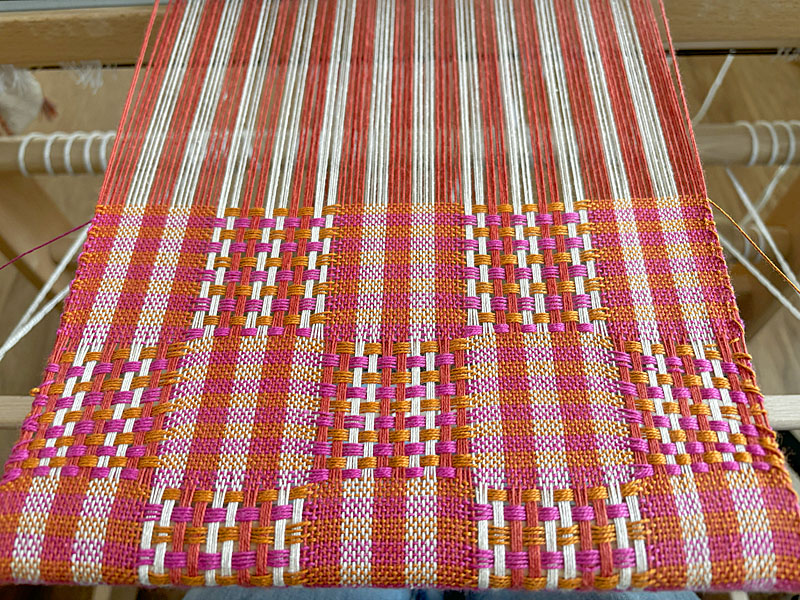
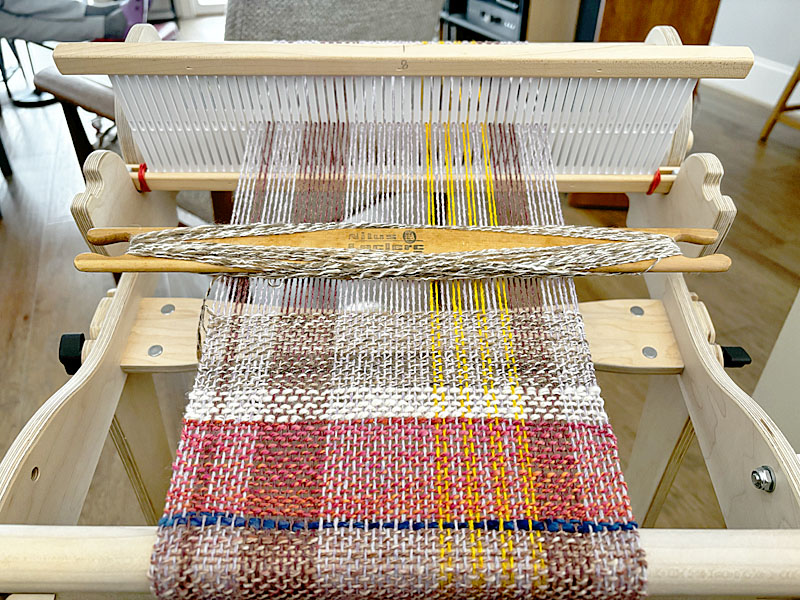
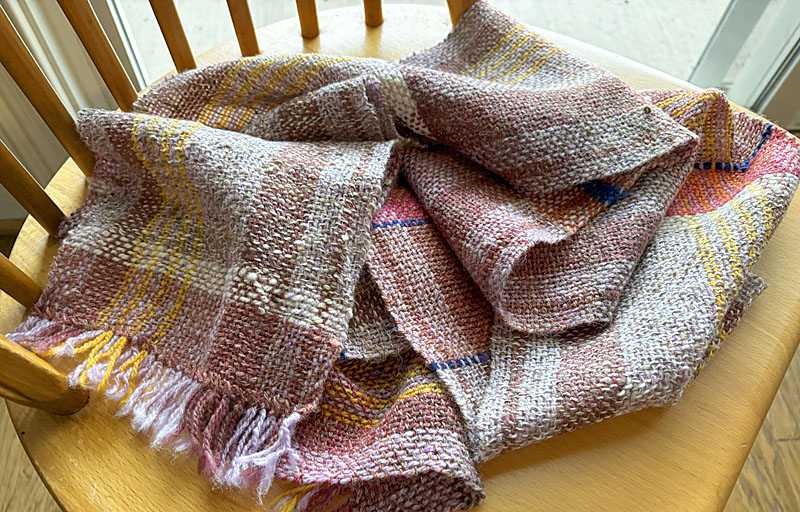
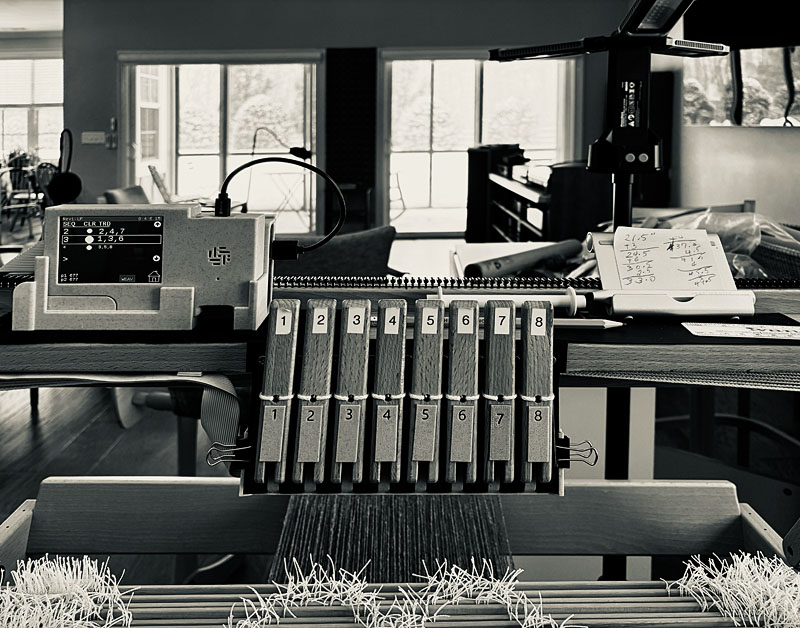
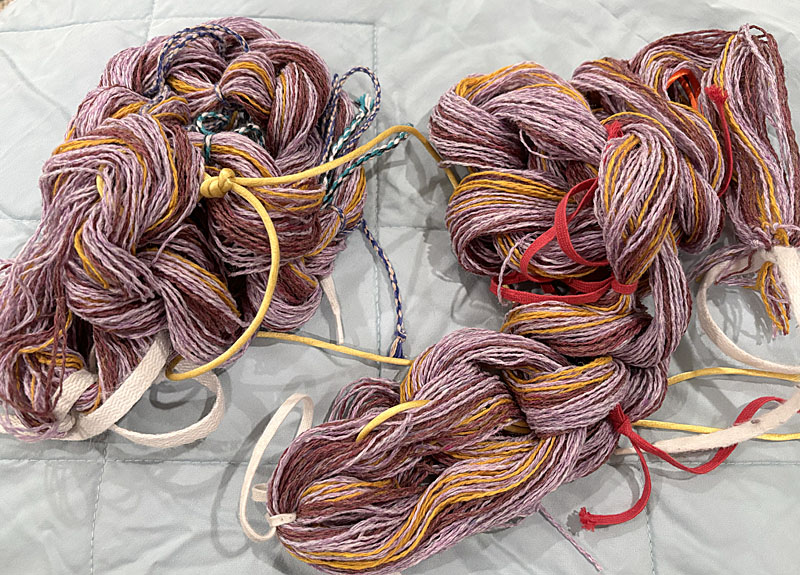
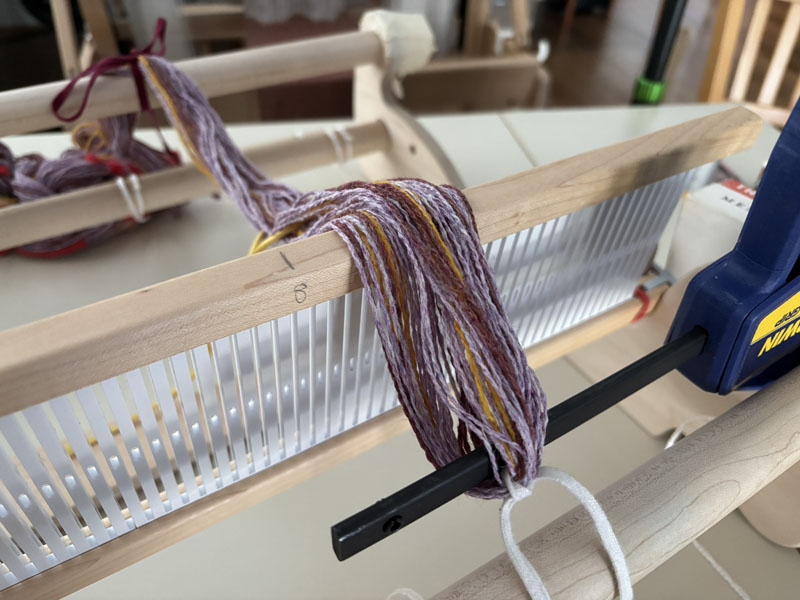
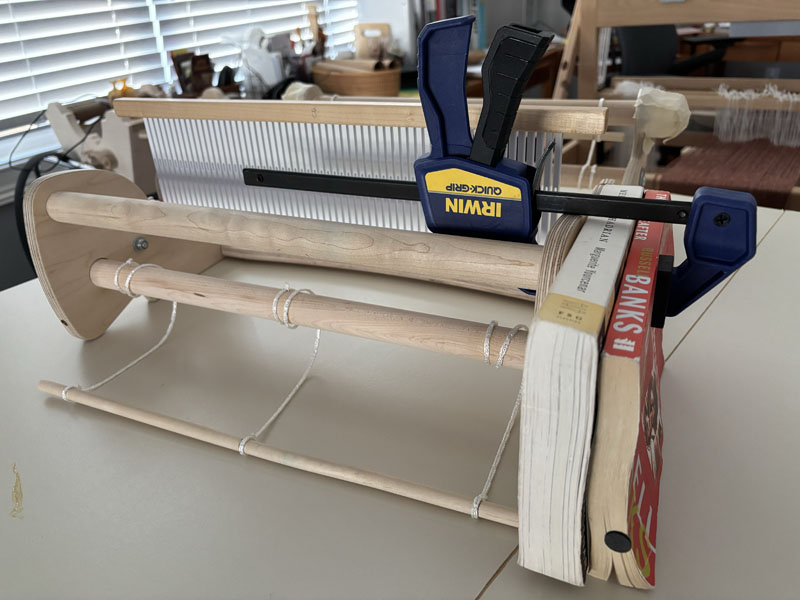
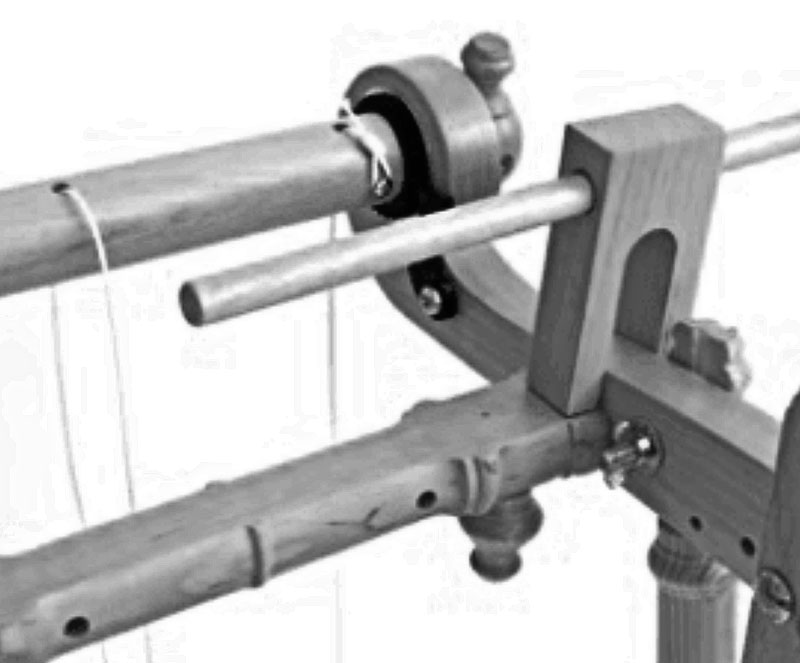
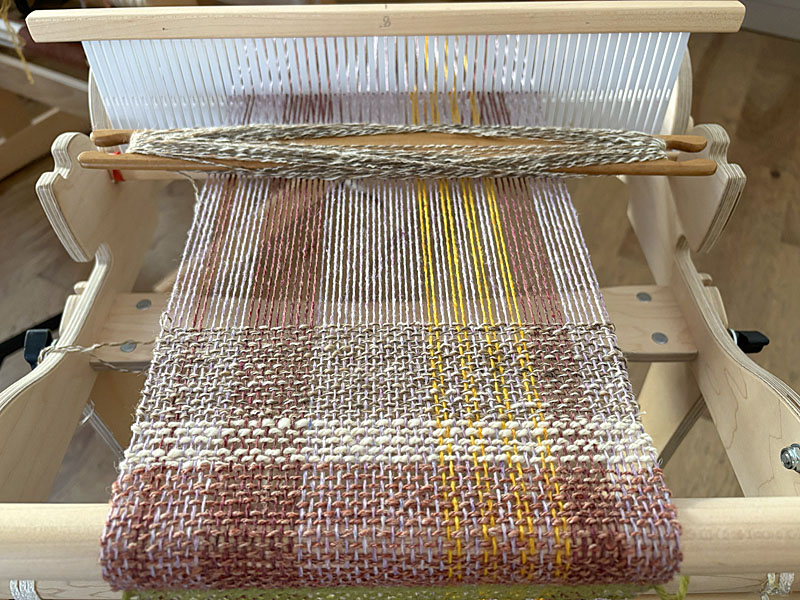
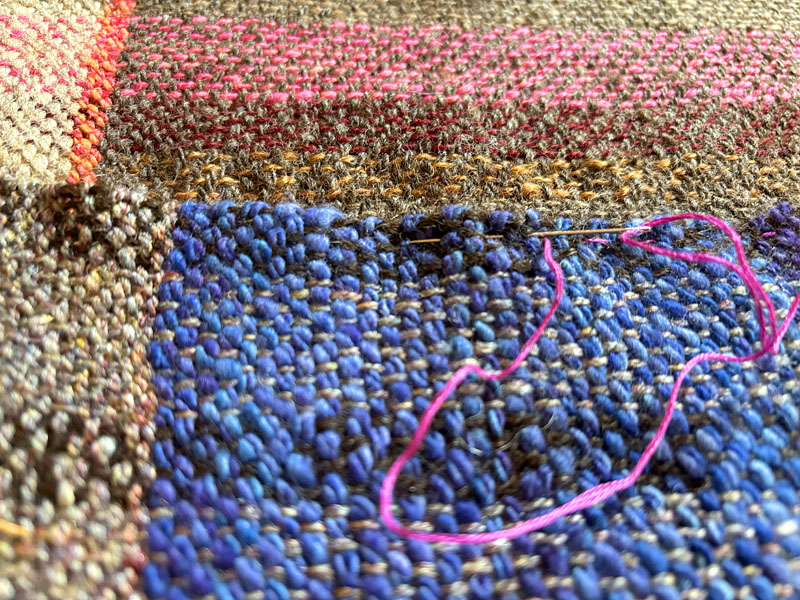
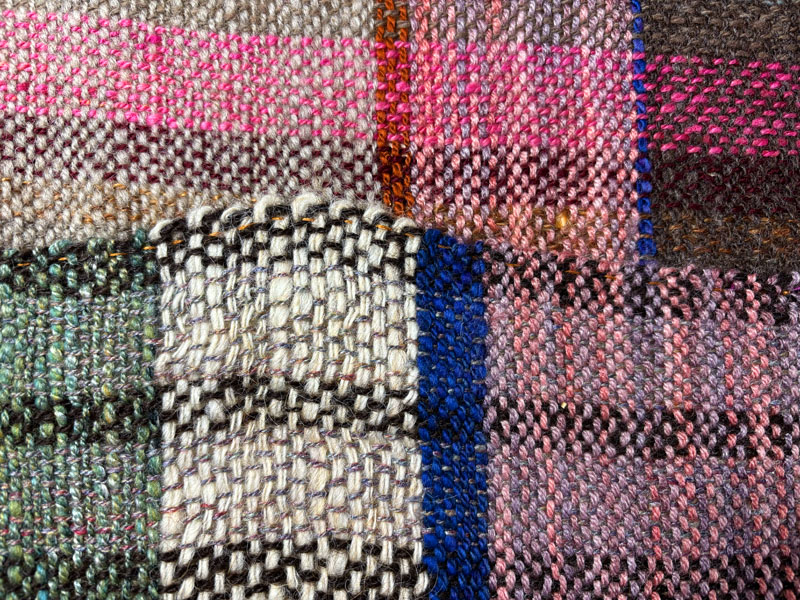
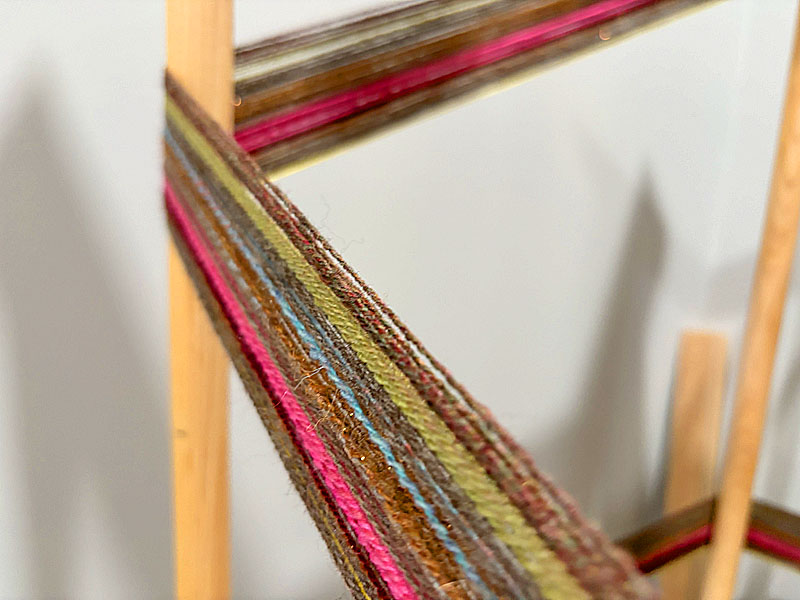
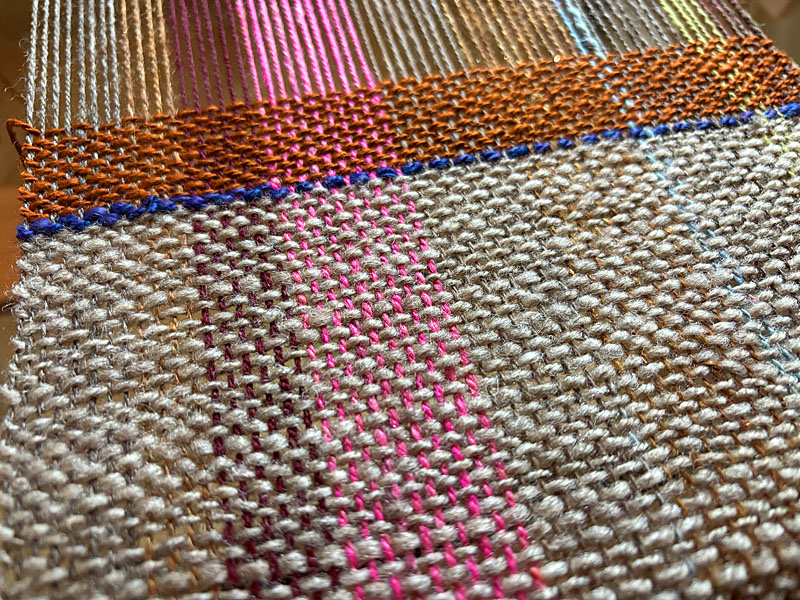
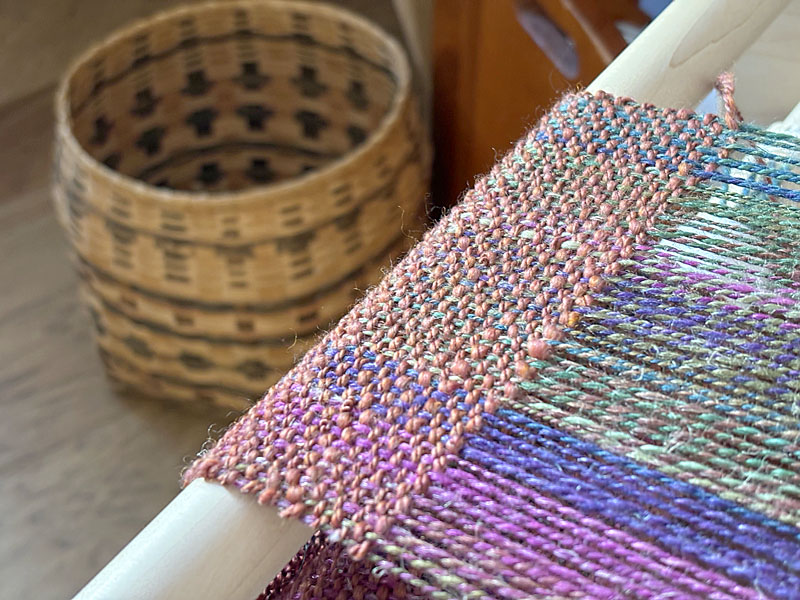
  • What do you do when your hands aren’t working the way they used to, and you have to give them a rest from throwing shuttles? Hereabouts the solution is to make a deep dive into the stash of handspun wool and warp up a rigid heddle loom.

    The longish skeins of habdspun are used for warp, and the shorter bits are perfect for weft stripes, hit-or-miss. This project will turn up in a garment. If I’m lucky it will be done soon, as the weather has turned cold here.

    I’m taking a risk, because some of the yarns are softest merino and some are hairy longwools, so after washing I’m expecting a few wavy spots, but nothing that can’t be fixed with a few blasts from my steam iron. Living dangerously!

    Meanwhile, in the Department of Books, I’ve just finished reading Vol. 1 of Rick Atkinson’s new trilogy, The British Are Coming: The War for America, Lexington to Princeton, 1775-1777 (The Revolution Trilogy Book 1) .

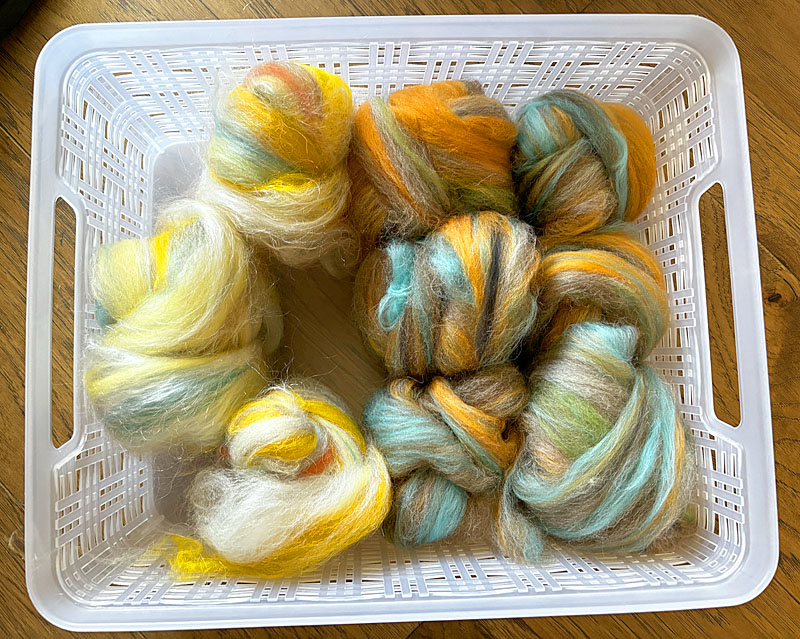
  • The following image is a scan of a fabric I wove on a rigid heddle loom a few weeks ago. It’s a balanced plain weave of 12 epi and ppi, hand washed and hung to dry. The yarn is a handspun wool/linen blend from my stash (I spun and plied the yarn from a custom batt I found at Lofty Fiber last year, an unlikely combination of natural flax and dyed wool). The scan is roughly life sized.

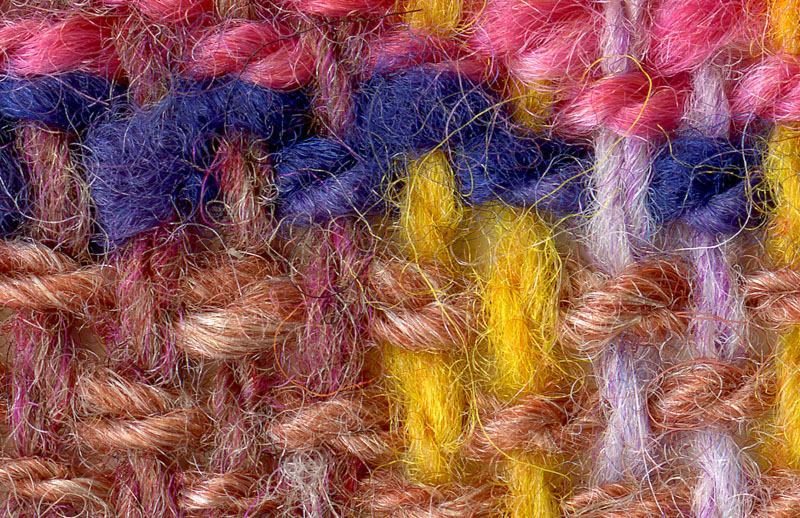
    And following is another scan of the same cloth, this time at about 32 times life size, executed on an old Epson scanner. In this scan the linen fibers really stand out.

    This was a fun project. First of all, the spinning was very easy. And second, I do love to play with my scanner! I feel like a kid with a new microscope.

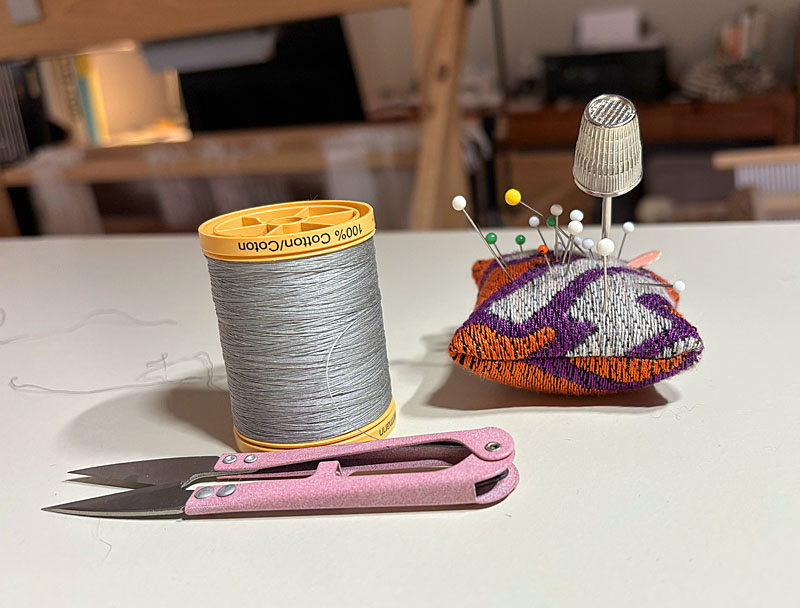
  • I collected as many pincushions as I could find for an impromptu group portrait. The felt ones were purchased on Etsy, the handwoven ones are scraps of my own fabrics, and the one nestled permanently in its own ply-split basket (my one foray into ply-splitting) is my own creation. Why so many pincushions? Well, I try to keep one at each loom for the repair of broken warp ends, and of course one at my sewing machine, And one shows up next to my favorite chair when I am doing an evening of mending or hemming. They are like a little family, each with its own history, and I thought it would be fun to gather them together in this season of Thanksgiving.
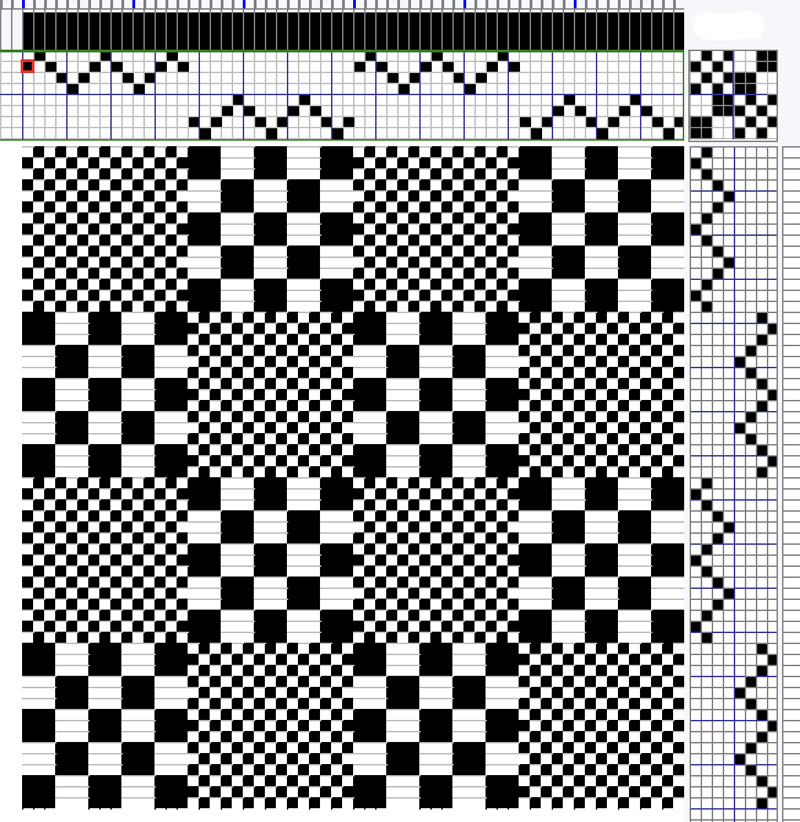
  • Further explorations of network drafting with initials greater tnan straight 4-end. In this first example, for 8 shafts, I have used a point twill as the initial: 1-2-3-4-3-2.The resulting threading is tromped as writ, and the tieup has no floats longer than 2. Maximum float length in the resulting draft is 5.
    The same process is followed in the following draft for 16 shafts. Max float lenth in the tieup is 3, and max float length in the full draft is 5.

    I haven’t yet woven these drafts but I suspect the combination of plain weave and areas of longer floats will produce a lacy fabric suitable for table linens, curtains, etc.

    The software I’m using for these explorations is TempoWeave from LoftyFiber.

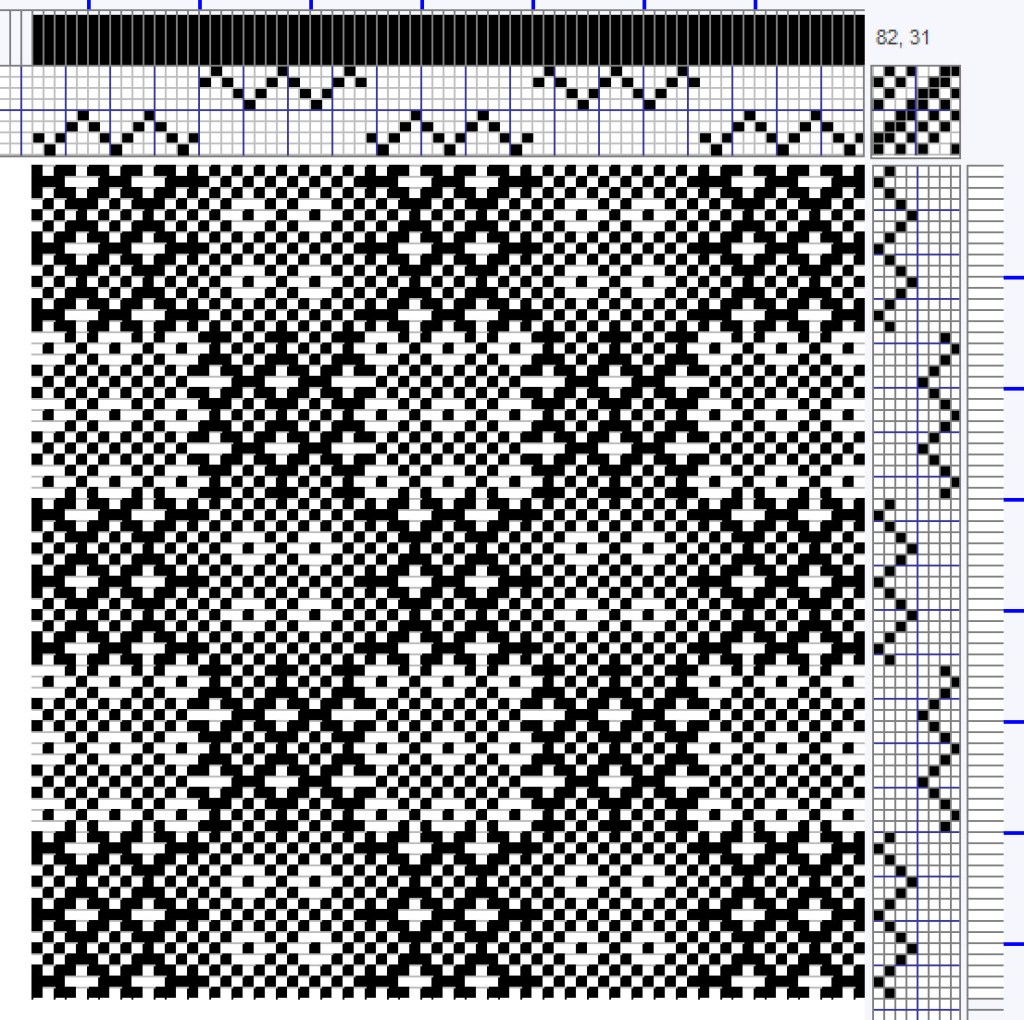
  • I spend hours playing with point twill threadings, mostly because I find them easy to thread on an 8 shaft loom. In the following illustration I show three stages in one of my experiments. Read these diagrams from right to left. First is a point twill threading with a treadling developed on a point twill initial (1,2,3,4,3,2). The max float length is 5. Then I took a small section of this treadling and mirrored it, so that the design contained internal symmetry. Max float went down to 3. In the final (leftmost) design, I turned the draft so that the treadling became the threading, then tromped as writ. The result is a lacy-looking thing.

    Here it is a little bigger. If you’d like to try weaving this, I’ve uploaded the draft to Handweaving.net as #81193.

    It’s a lot of fun to take sections of this draft and repeat or reduce them; and you can spend hours playing with changing or wrapping the tieup. Just remember to keep track of float length: longer floats require closer setts.

  • In this halvdrall draft, you will see that this design can be woven on 4 shafts. But because of the imbalance between numbers of heddles on shafts 1 and 2 compared to shafts 3 and 4, I would have had to move heddles around on the loom, a task I really hate and try to avoid. I have the luxury of 8 shafts on this loom, so I spread the threading out onto all 8 shafts. Problem solved.

    The warp is linen, the tabby picks are cotton, and the pattern wefts are marled linen and a very stiff natural colored hemp. All the yarns are from my stash, and I was going for maximum absorency. The following picture is the first towel cut off and hemmed, but not washed.

    The following picture is the towel after machine washing and drying. Shrinkage in warp & weft is about 12%. The absorbency is wonderful. However, I am very disappointed in the behavior of the hemp pattern weft which appears to have gone its own way and pokes out of both selvedges in a very uncivilized manner!

    Never mind. The towel will be used and enjoyed. Just not for company.

  • I’ll bet you didn’t know that four leaf clovers can be blue. Insert smiley face. This draft for eight shafts was created using the principles of network drafting and amalgamation. To learn more about these topics, check out the online class I’ve created in partnership with LoftyFiber. The class is self-paced and contains many hours of video and written instructions. It is suitable for weavers with eight shafts and above.

  • I’m assembling leftover cones of 30/2 linen in an effort at stash-busting (does that ever end?) and tying to arrange them in order of tonal value.

    An effective way to do this is to photograph the yarn in olor and then reduce the image to black and white.

    After the decisions are made, I begin winding the warp, two ends at a time, and as each color is used up, I add the next one in line, and so on. This warp will require two chains. Here’s the first…

    …and here’s the second.

    The two chains meet again in the raddle, and they are ready to be wound onto the warp beam. Stay tuned.

    And in the Department of Books, I have finished reading 1Q84 by Haruki Murakami, one of my favorite authors. Warning – X-rated for violence and adult content.

  • When I was a very new weaver, one of the first pieces of cloth that draw my attention was a handspun, handwoven gray wool. The structure was plain weave, there was nothing flashy about it, but it invited you to caress it and enjoy its slight variations in tone. As. I recall, the warp and weft were balanced: same epi and ppi.

    But as I jumped ahead willy-nilly in my weaving self-education, and followed my personal rabbit holes of loom-controlled structure, I never got around to covering some of the basics. It seems that now is the time to repair some of those omissions.

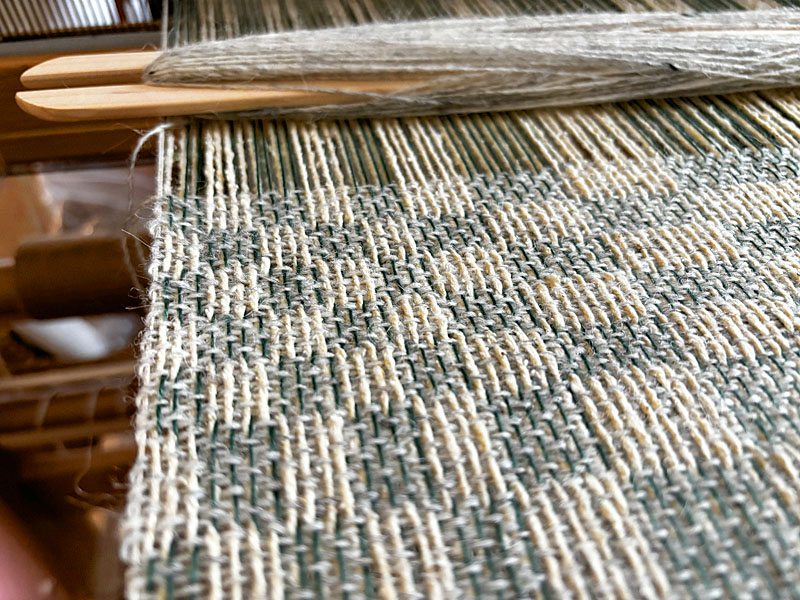
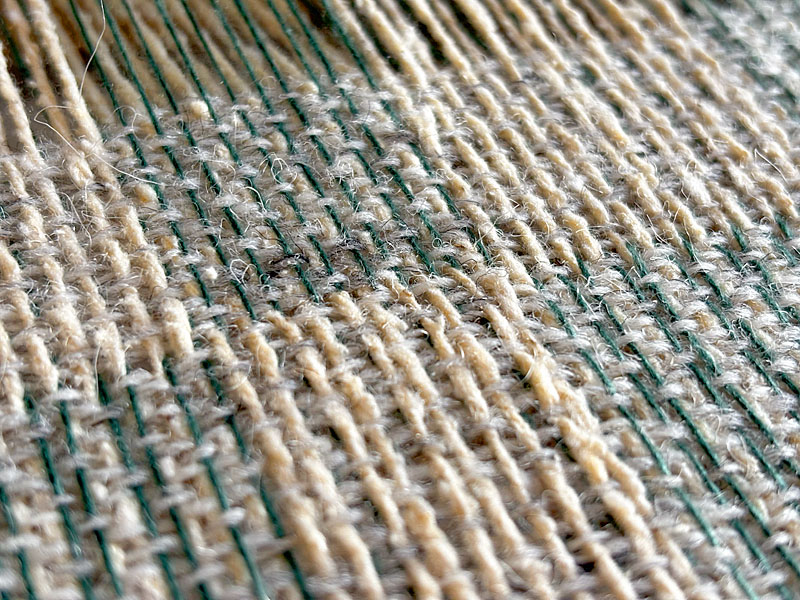
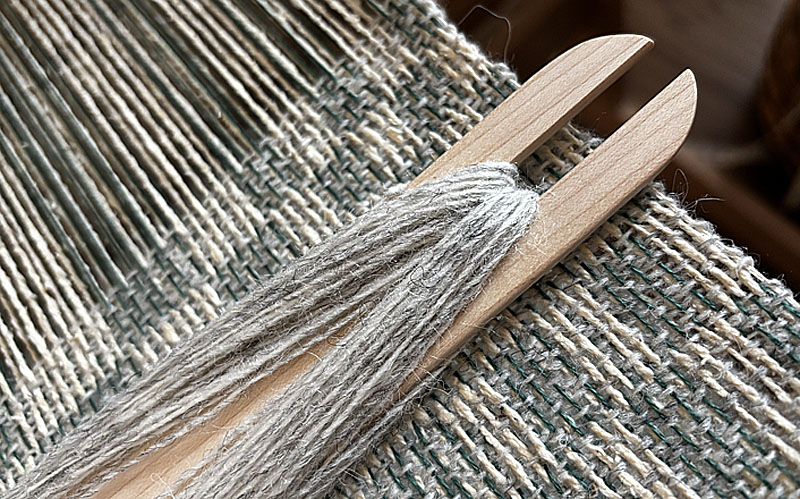
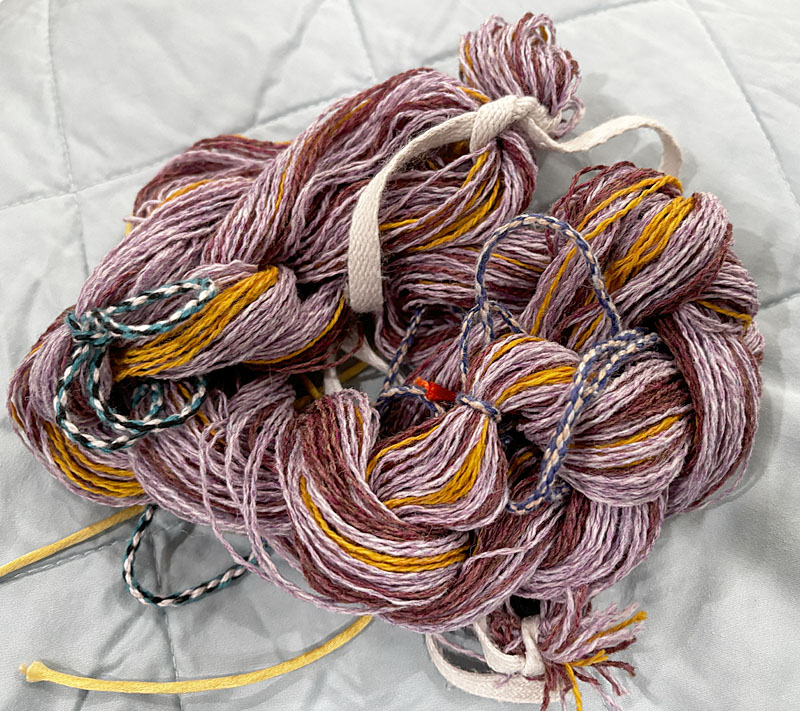
    From my stash I pulled some skeins of handspun woo/linen blend. This yarn was spun and plied a couple of years ago from a carded blend purchased at Lofty Fiber. It was a dream to spin and was just waiting for the perfect opportunity to shine. I warped my rigid heddle loom at 10 epi. So far I am getting a comfortable beat of almost 10 ppi. I expect that after the tension os released and this piece is wet finished I will get a balanced cloth. We’ll see.

  • Last night while sorting through a box of stuff in order to make room for more stuff (an endless cycle around here), I found this treasure. It’s a tiny gansey, wingspan 14″, which I knitted many years ago in a workshop taught by knitting genius Beth Brown-Reinsel. Full disclosure: this is Beth’s own design, although the initials are mine.

    Discovering this tiny sweater after so many years is heartwarming. I’m going to find a space for it on the wall. Or if any appropriately sized person shows up here, they are welcome to wear it.

  • Here’s the puzzle: whether to buy more yarn and weave/stitch/sew to make more stuff which then has to find a place, or to remake/reuse what I already have stored. And here’s the other part of the puzzle. There are still only 24 hours in each day (at last count). What takes priority? Time at the computer, time at the loom, time with family and friends, time with books…as my grandmother used to say, Oy vey.

    A big salute to all my hardy friends (and some not so hardy) who turned out for No Kings Day. My heart was with you.

  • Yes, we’re back, with a slightly different look. After blogging for 15+ years on a platform which vanished after a 30-day notice (although I should have seen the warning signs) we are back. Thanks for your support and your patience during this frustrating time. And a very big thanks to Trevor, Andrew, and Cathy, three skilled and patient humans, who made the new Weaverly happen.

    I decided not to include my email address, but you can communicate with me, if you wish, by leaving a comment down below. Scroll all the way down.

    There’s also a place on the sidebar to subscribe.

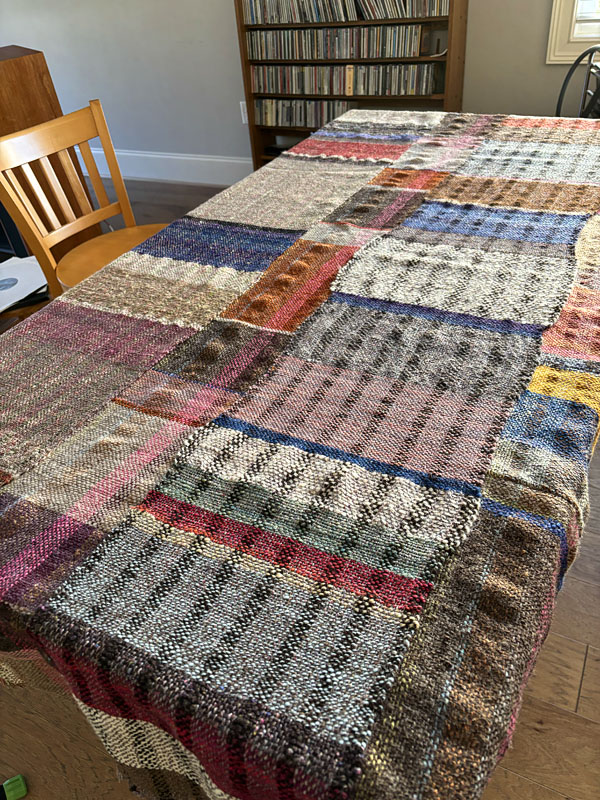
    Meanwhile, back at the ranch, I experienced a bookcase collapse, weaving books all over the floor, looked like an earthquake. Had to take steps. Reorganization time. Here are a few unposed snapshots of the studio this morning.

  • I am fascinated by weather maps and find unexpected beauty in wind patterns especially. How can anyone resist this morning’s map off the Carolina coast (as long as you are warm and dry, as I hope you are)?

    Yesterday I cut off a finished warp, and machine washed & dried it after separating the individual napkins (which had been hemstitched while still under tension). I had not previously worked with this 8/4 cotton as warp and was blown away by the beauty of the fringe after washing. I had spent weeks on the computer version of the draft, and more weeks on the weaving, but was totally unprepared for the star of the show: the beautiful fringe.